



The-Vug.com has the best guide to mineral fakes and forgeries online and it just got better!!
The guide has been refreshed and now it is, hands down, the very best mineral fakes page online.
It seperates the fake minerals into different subjects;
Man Made Crystals
Coated Crystals
Chemical Reaction to Crystals
Mechanic Alteration of Crystals
Irradiation of Crystals
Heat Treatment of Crystals
Dyeing of Crystals
Misrepresentation
Hoax
Artisian products
YOU can HELP spread this information far and wide by posting this link on your facebook, in your club newsletter, on your website or blog, on a post at that social networking site you love so much or ANYWHERE! People should know the basics of these scams so they don’t get scammed while visiting a gem and mineral show in Tucson or Denver!
Some of the new addition to the guide are a video showing how to form bismuth crystals, new “man modified” crystals, better examples of irradiated heliodor and smoky quartz. Photos of the roasted acanthite ore silver specimens are available to view, though the mineral community would like to silently sweep that one under the rug. The legendary scam lapidary item, Cal-Silica is featured, along with all your favorite range of dyed minerals!
If you never checked out the old guide, here is your chance to get a fresh view! If you are familiar with the classic guide, you’ll love our new updated version! Thanks to everyone at The-Vug.com for providing the new content and thanks to you for sharing it with your friends!
Insert this snippet of code into your website or blog to place our banner and link on your site! By doing so you are helping so many people avoid getting scammed!
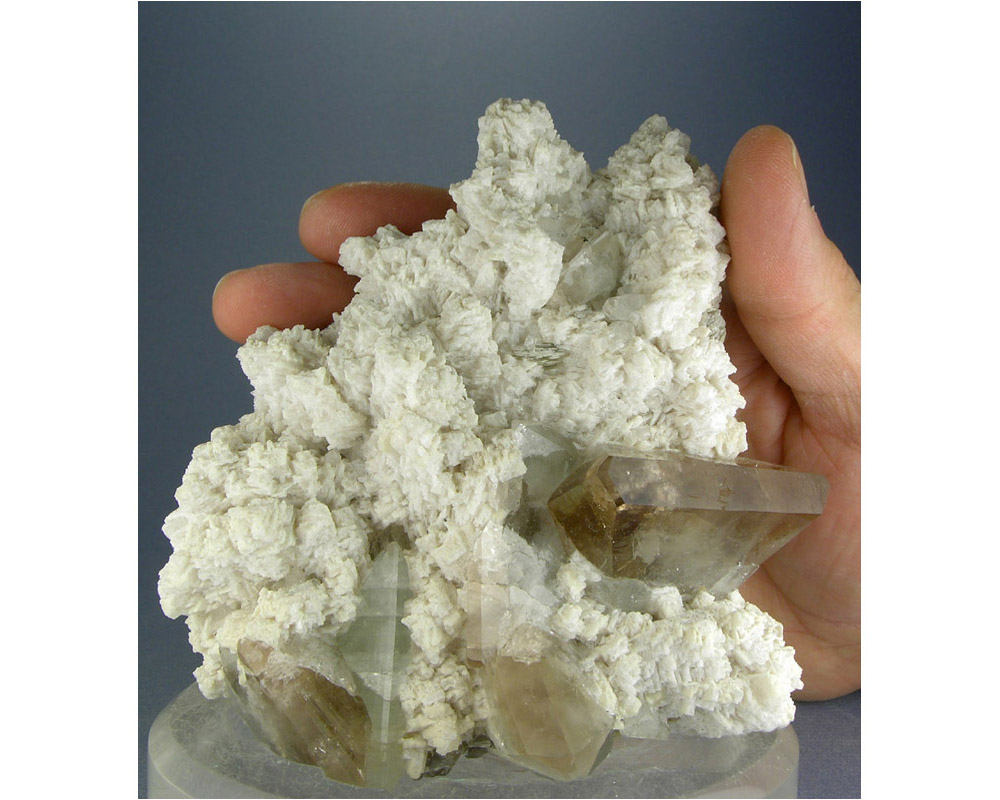
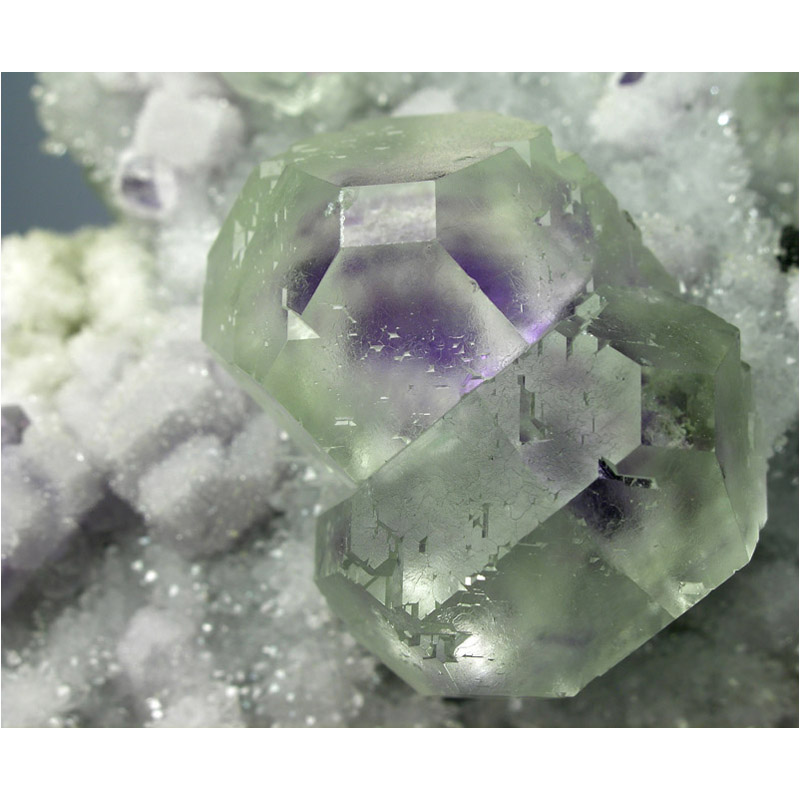
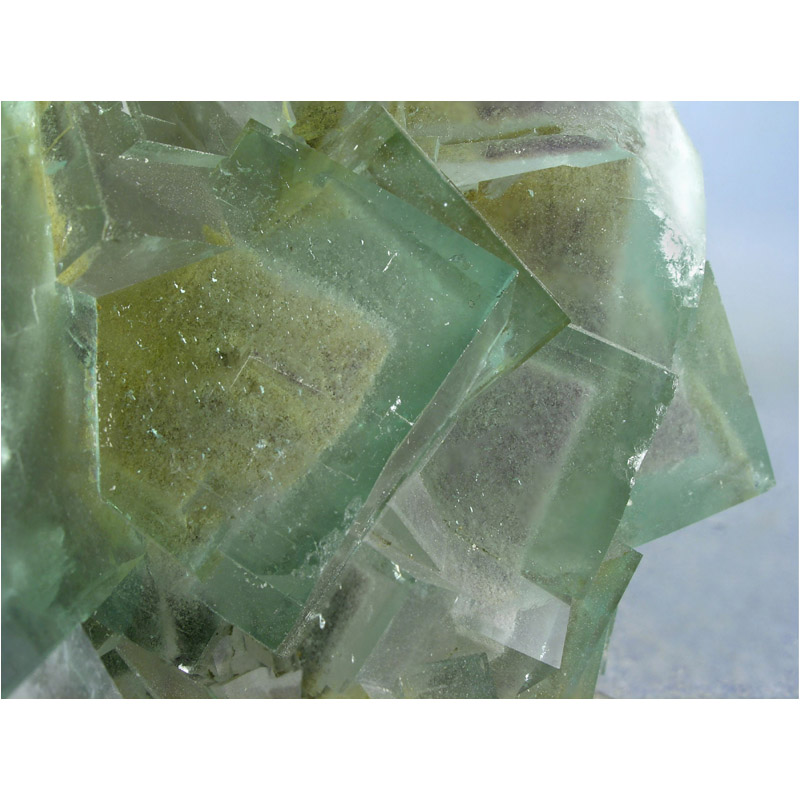
In a perfect example of Namibian forward thinking, in 2010, the Minister of Mines told the artisan miner population to avoid the sale of faked and created mineral specimens. While fakes from Namibia have always been somewhat uncommon, a few mineral dealers have been temporarily disappointed when a flat of crafted specimens make their way onto the mineral marketplace. The clusters from Erongo are typically the most forged. The feldspar matrix can have aquamarine and fluorite crystals glued on with bits of mica over-top the glue. Yet, the natural clusters are so good, it keeps mineral collectors coming back.
Namibia is a wonderful country to visit. The beautiful scenery, the exotic wildlife and the amazing people all make for an unforgettable experience. To add the fact that such a bounty of fine crystallized minerals for sale are there is another bonus to a desert paradise!
These first showed up at the Denver mineral show in 2009.
Many people were suspicious about these being made by microabrasion, but nothing had been proven either way. I saw Ed Rosenzweig at the Houston mineral show and talked to him about the pieces. He was one of the main dealers selling them at the Springfield show, but as soon as controversy came up, he stopped selling them. He lent me five pieces of hollow galena that he had been told were natural. I also received two samples of hollow galena from an anonymous donor, which he had made by microabrasion, using a machine like the MicronBlaster MB10 Micro Sandblasting Unit.
Lance Kearns at James Madison University offered to let me use the SEM there, so I chose two specimens from Ed and one fake to look at. The fake one still had remnants of abrasive material embedded in the surface – and so did the other two. Here is a picture of a glass ball in one of the specimens from Ed:
The other piece had crystals of aluminum silicate rather than glass spheres – but still abrasives!
This doesn’t prove that all of the hollow galenas are fakes, but there are definitely fake ones out there.
We originally heard about these at the Munich show, however, by the time we went to the booth they were gone. So, I’m both bothered they would bring them to Tucson, yet, happy that John Veevaert got a photograph of one to share with you at home.
Check out this article…the meteorite is described as “black with a shiny crystal-like gleam”
“thought it was a lump of coal”
Are we sure it is not just a piece of slag or maybe a tektite. Hey, good for the kid for finding a rock in the back yard, but did they verify the specimen with ANYONE else besides the parents and eBay? It doesn’t say so in the article. Sloppy reporting for sure!
Stuff tends to spread like wildfire on the internet, and anything that drags you away from Twitter or Facebook will usually be either something completely amazing or, as more commonly experienced, a complete and utter hoax. I genuinely worry about the people that fall for this stuff – if you’re buying meteories off the internet, then chances are you’re probably being scammed. I could go outside and buy some red sandstone, take a welder to it, and claim it was from Mars. Would I make a ton of money? MAYBE!
I have a friend who is an avid meteorite hunter and he swears by the book Field Guide to Meteors and Meteorites. He has gone to Morocco and been on the trail of meteorite falls all over the United States. The amount of work that he puts into tracking, sourcing and looking for meteorites is much different than the standard, “hey, this black rock looks like a meteor” that you see in so many stories like this.
Certainly not something you want to find out about your beautiful gem crystal on matrix…but in fact, a whole subdivision of gem mineral sales at the point of origin are sometimes manufactured specimens involving a liberal slathering of glue to hold everyting in place.
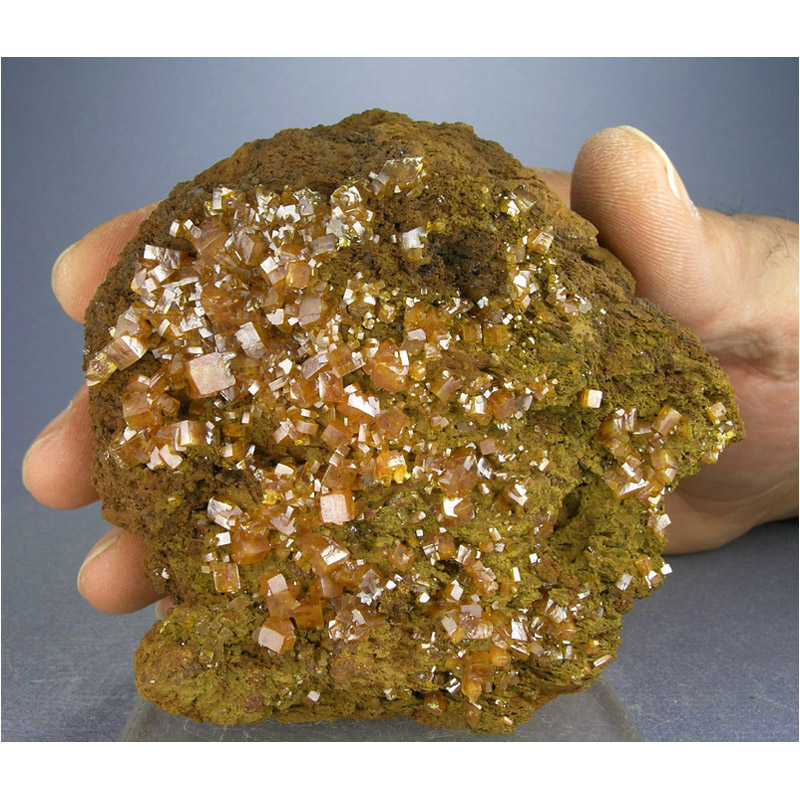
For instance, the new wonderful Scorodite xtls on matrix from China. Beautiful, yet glued.
So, if you have any specimens you wonder about, give them a soak in some Acetone. See what falls apart! Sometimes nothing, sometime something substantial. Bummer for us honest mineral collectors and dealers.
Thanks to Dr. L for the photo!
Stretch Young wrote a great article about this subject relating to Emeralds in Calcite from Bolivia for The-Vug.com Quarterly Magazine Fakes Issue, which is available in the Hardcover collected reprint of the magazine, available on The-Vug.com
People ask me all the time which glue is the best for repairing your specimens, as well as the most common used glue… Instant Krazy Glue, of course!
In the video above, Alfredo Petrov shows Justin Zzyzx an Aragonite with Gypsum from Spain that has been dipped into Copper Sulfate, turning the Aragonite EMERALD COLORED!, as if it were pseudomorphed into Malachite. Very pretty, but very fake!
You can buy a bucket of Applied Bio Chemists Aquarium COPPER SULFATE 5 lb and experiment with calcite and other minerals turning different colors and grow some of your own crystals. It is a lot of fun, but don’t sell the end product as a legit mineral!
The 2008 edition of The-Vug.com Quarterly Volume 1 #4 is a special issue devoted to fake mineral information!
The-Vug.com Quarterly Magazine was published from 2008-2012, with 16 issues devoted to several topics of mineralogical interest.
You can purchase the HARDCOVER 324 page complete reprint for the LOW price of $34.95 plus shipping. It is a perfect coffee table sized book and the “Fakes” issue can sell for as high as $70.00 on the secondary market.
Click on the link above to purchase the book directly from the publisher or check them out at www.fortysevenpress.com
We have been over the red glass sold as red quartz issue before, the first time I saw it was in 2002 and it seems it will never stop, though the popularity it dwindling.
Red Quartz polished items from China are Red Glass. Very simple. In fact, some also say it is from Madagascar or somewhere in the asian pacific. Of course it is really just polished red glass.
We came across an eBay auction a few years ago, two seller accounts, the same photos!
One is a buy it now with FREE shipping! Only $88.00
Next is an auction for .99 with $70.00 shipping!
Either way, getting his price! Advertises it as “POLISHED BLOOD-RED QUARTZ CRYSTAL”, but in reality needs to be labeled “Bright Red Glass Sphere”
Don’t we all WISH there was a RED QUARTZ location in nature that actually produces stuff like this? Who knows, maybe one day we will find one just like that in a huge quanity, but until then, GLASS. It is glass.
The image above is a page out of The-Vug.com Quarterly Magazine, which you can buy directly from the publisher, FortySevenPress.com. You can see, this stuff is now being marketed as a material for cheap beads, like the auction below.
Click on this link above and visit The-Vug.com to watch us dye Okenite with food coloring!
You can get the Fakes and Forgeries issue of The-Vug.com Quarterly Magazine in the complete reprint book, available HERE on The-Vug.com
It is exciting to watch the okenite absorb the food coloring so rapidly. Like a cotton ball, simply touching the okenite to the liquid draws the food coloring deep inside the cluster in an instant.
Citrine is one of those minerals that causes the most confusion when people start collecting minerals.
Naturally occuring Citrine is a variety of Quartz that is found at only in superb examples few places in the world. The color of natural Citrine is a lemon shade, in stark contrast to the predominatly red influence to the majority of “Citrine” available to begining collectors.
Since there are so few locations for great quality natural Citrine, the demand for this brightly colored mineral lead to people figuring out that if you stuck certain types of Amethyst into a kiln you could turn the purple into a deep reddish orange.
I’ve sent numerous messages to some dealers about the misleading descriptions and they respond by making the descriptions that much more misleading!
This
Take this quote for example…
Citrine is very difficult to acquire, and the cost is more expensive than Amethyst of the same quality. This Citrine is a higher standard of quality which of course commands a higher price as with all of my Citrine speciments they have very little matrix which means more crystals for your money.
The problem with this statement is that there is no difficulty to acquire heat treated Citrine from Brazil. Do you need a 5000 pound contaner load? I can have one delivered to you with a couple of phone calls. The Amethyst deposits of South America are nearly limitless and while amazingly beautiful, not lacking in abundance. The problem with heat treated Amethyst is that it becomes brittle and subject to cracking. Is this a “bad” thing? Not really, there is always room for treated decorator minerals. But honesty should be key, informing the customer of what they are buying, rather than leading them to belive that bright orange citrine crystals come out of the basalts of southern Brazil. This stuff is sold by the kilo. Don’t be a sucker, shop around for the best price and form, you’ll get much more enjoyment that way.
Now, a language barrier is leading many dealers from Asia to sell Quartz that has been found with a layer of Iron Oxide over the surface as Citrine. In reality, a dip in some Oxalic acid will return these Quartz crystals to their proper form, white Quartz. Western Vs. Eastern ideals on names and the nature of fakes varies and while we might demand proper identification, the asian market will just label minerals whatever suits them that day. So, iron stained Quartz becomes Citrine! But in reality, most people remove the Iron staining from their specimens.